Dong Ethnic Group
Introduction
The Dong Ethnic Group is a prominent ethnic group located primarily in the southern regions of China, particularly in the provinces of Guizhou, Hunan, and Guangxi. Known for their rich cultural heritage and traditional practices, the Dong people have maintained a distinct identity through their unique language, architecture, music, and customs. Their cultural expressions have gained recognition on an international level, with the Dong's Grand Song being listed in 2009 on the Representative List of the Intangible Cultural Heritage of Humanity. This traditional music form exemplifies the community's practice of passing down knowledge and culture through song, illustrating the saying among the Dong that "rice nourishes the body and songs nourish the soul."
The Dong people have a vibrant cultural tapestry marked by multifaceted traditions that encompass various aspects of everyday life. These traditions are not only celebrated within the community but have also attracted interest from people outside the Dong regions, offering a glimpse into the harmony between the Dong people and their natural environment. The ethnic group is renowned for its intricate wood architecture, including drum towers and wind-and-rain bridges, which symbolize their architectural ingenuity and community spirit. Furthermore, the Dong celebrate numerous festivals with colorful performances and traditional rituals, serving as a testament to their enduring cultural legacy.
History
The history of the Dong ethnic group is one of resilience and adaptation, spanning centuries of development in the mountainous regions of southern China. The Dong people are believed to have originated from the Baiyue tribe, an ancient group that inhabited southern China. Over time, the Dong developed their cultural identity, influenced by interactions with neighboring ethnicities and the natural environment.
Culture
The culture of the Dong ethnic group is characterized by a profound appreciation for harmony, community, and the natural world. Central to the Dong cultural identity is their music, particularly the Grand Song, which plays a vital role in the transmission of knowledge and tradition. Songs are performed in a cappella style, with choirs consisting of different age groups and genders, each contributing to the preservation of cultural heritage. The genres of these songs vary, including ballads, children's songs, and imitative songs that mimic the sounds of animals, showcasing the performers' vocal dexterity.
Language
The Dong people speak the Dong language, which belongs to the Tai-Kadai language family. It is a tonal language, and there are multiple dialects spoken across different Dong regions. While the Dong language is the primary means of communication within the community, many Dong people are also bilingual, speaking Mandarin Chinese as well. Efforts to preserve the Dong language are ongoing. Educational initiatives have been implemented to ensure that younger generations continue to learn and use the Dong language.
Architecture
Dong architecture is renowned for its elegance, functionality, and harmony with nature. The traditional structures, such as drum towers and wind-and-rain bridges, are exemplary of Dong architectural style. Drum towers serve as central gathering places in Dong villages for meetings, celebrations, and performances. These wooden structures are built without nails, using intricate joinery techniques that have been passed down through generations. Wind-and-rain bridges, characterized by their covered walkways, provide shelter and passage in all weather conditions, reflecting the Dong people's ingenuity and adaptation to their environment.
Festivals
Festivals are an integral part of Dong culture, serving as occasions for community gathering, cultural expression, and the reinforcement of social bonds. One of the most notable festivals is the "Pohui", where villagers come together to celebrate with music, dance, and traditional ceremonies. These events often feature folk performances, showcasing the Dong's rich musical and dance heritage. Another significant tradition is the long table banquet, a communal meal that symbolizes unity and abundance. The festivals not only honor Dong customs but also provide an opportunity for cultural exchange with visitors and neighboring communities.
Clothing
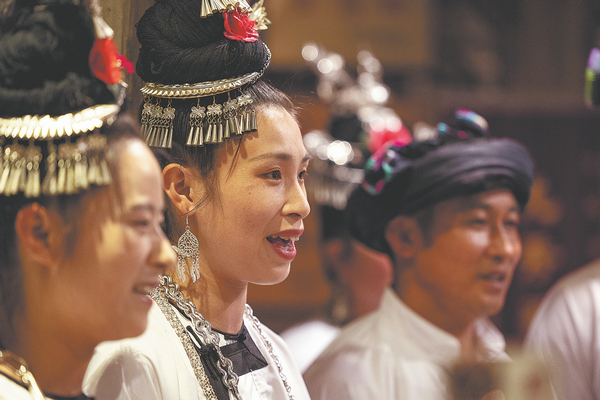
Traditional Dong clothing is distinguished by its vibrant colors and intricate embroidery. Dong attire varies depending on the occasion, with everyday wear being more subdued compared to the elaborate costumes donned during festivals and ceremonies. Women's clothing typically features brightly colored jackets and skirts, adorned with symbolic embroidery reflecting aspects of Dong culture and beliefs. Silver jewelry is commonly worn as an embellishment, adding to the visual splendor of traditional garments. Men’s clothing, while simpler, often includes elements that demonstrate craftsmanship and cultural motifs.
Music and Dance
Music and dance are central to Dong cultural expression, with the Grand Song being the most prominent musical tradition. The multi-part singing style, performed without instrumental accompaniment, is a testament to the vocal skills and communal spirit of the Dong people. Dance performances often accompany musical events, showcasing traditional movements and costumes that narrate stories or celebrate community milestones. These art forms are not only a source of entertainment but also a means of preserving Dong history, beliefs, and social values, ensuring that these traditions remain vibrant for future generations.
Society
The social structure of the Dong ethnic group is characterized by strong communal ties and a deep respect for family and elders. The Dong community is typically organized around village units, where collective decision-making and mutual support are central to daily life.
Family is the cornerstone of Dong society, with extended family units often living in close proximity. The Dong people place great importance on kinship bonds, and family gatherings are common during festivals and important life events. Elders are highly respected, and their wisdom and guidance are sought in familial and community matters. The family structure emphasizes cooperation and support, ensuring the well-being of all members and fostering a sense of belonging within the community.
Preservation and Promotion
Efforts to preserve and promote Dong culture have gained momentum, with initiatives focused on safeguarding intangible cultural heritage such as language, music, and traditional crafts. The inclusion of the Grand Song in the Representative List of the Intangible Cultural Heritage of Humanity underscores the importance of such efforts on a global scale. Local government and community organizations have implemented programs to document and teach Dong cultural practices, ensuring their longevity. Cultural festivals, exhibitions, and educational programs serve as platforms for showcasing Dong heritage to both domestic and international audiences, fostering a greater appreciation and understanding of this unique culture.








